

🔍 Deep Dive #34
Shadows and Shells: How Russia Evades Sanctions



📝 The TL;DR
Shadow fleet: a clandestine network of aging or decommissioned tankers that covertly transport sanctioned oil beyond the reach of enforcement mechanisms. Today, approximately 65 percent of Russia’s crude exports are carried by these vessels.
Following Russia’s full-scale invasion of Ukraine, Western coalitions imposed sanctions and a 60 percent price cap on Russian oil in an effort to constrict its exports and curb Moscow’s wartime revenue.
To maintain its oil export levels by evading Western sanctions, Russia swiftly expanded its shadow fleet and began selling oil through a network of shell companies, employing a variety of fraudulent tactics to disguise and hide ships.
Although Western nations have escalated from economic pressure to physical enforcement, Russia’s illicit financial networks remain difficult to penetrate, and overly aggressive sanctions could drive up global oil prices.
The United States faces a tradeoff between limiting Russia’s wartime revenue and hiking gas prices at the pump with sanctions and other enforcement mechanisms.
📍Shadows and Shells: How Russia Evades Sanctions
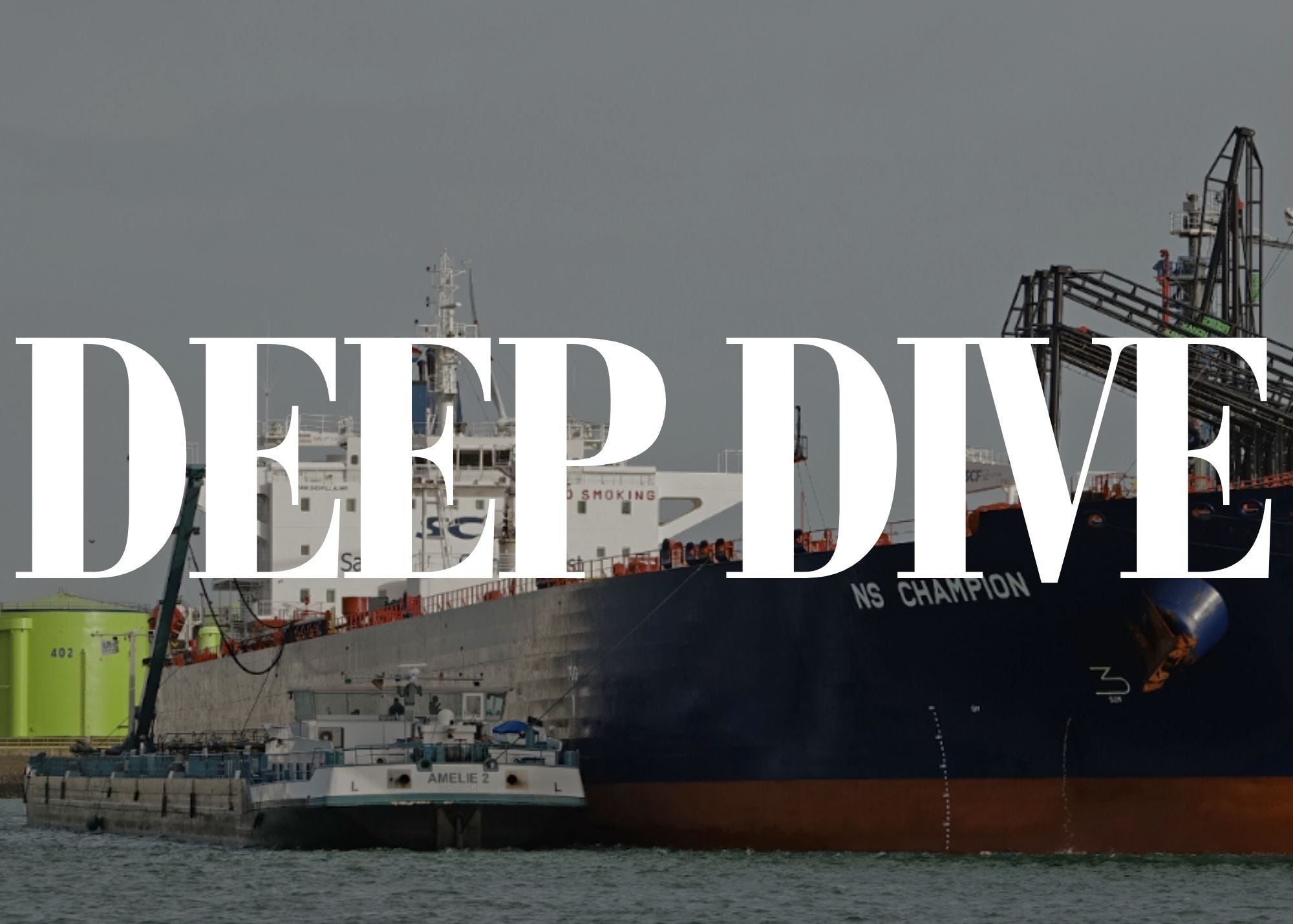
After a two week pursuit of a Russian-flagged oil tanker in the northern Atlantic, U.S. forces seized the tanker off the coast of Iceland. Shortly after, the French Navy intercepted a Russian oil tanker in the Mediterranean for sailing under a deceptive flag. Western countries are aggressively acting to contain Russia’s “shadow fleet,” an armada of aging tankers transporting sanctioned oil globally that rely on opaque financial networks. The term “shadow fleet” refers to ships that violate international identification standards, in particular those set by the International Maritime Organization (IMO).
In recent years, Russia’s shadow fleet has enabled Russia to remain the world’s second-largest oil exporter while directly financing its war operations in Ukraine. By evading maritime law to obscure its oil trade, Russia has uncovered the extent to which Western sanctions project economic power. While the United States, the world’s current largest oil producer, loses leverage in the global energy market, Russia’s sanctions evasion schemes continue to undermine international maritime laws and thus the Western-led global order.
Overshadowing International Law
Countries including North Korea, Iran, and Venezuela have operated shadow fleets as part of sanctions evasion schemes. Russia first began developing its shadow fleet in 2014 after the EU imposed significant restrictions on its transportation of oil and other goods in response to Russia’s annexation of Crimea. The sanctions aimed to damage the fossil fuel exports which underpin Russia’s economy, representing 14 percent of Russia’s GDP in 2021. In response, Russia has employed ghost fleets, which defy international maritime regulations, to ensure its economic stability. These maneuvers, which allow Russian oil transport under sanctions, violate the International Convention for the Safety of Life at Sea.
To mask their ownership, Russian shipowners rely on open registries in economically weak “flag-of-convenience” nations that offer vessel registration without stringent verification processes. Panama, Liberia, and the Republic of the Marshall Islands have historically served as three dominant registries of this kind. Fourteen percent of tankers linked to Russian trade were registered in Panama as of August 2025, when Panama responded to diplomatic pressure and began canceling the flag status of U.S.-sanctioned ships. Russian operators have increasingly turned to smaller flag states, like Cameroon or Honduras, to avoid regulations. They have also forged registration without official documentation from a flag state.
Furthermore, the United Nations Convention on the Law of the Sea (UNCLOS) treaty establishes a legal framework for maritime activities. It requires vessels to register with and fly the flag of a specific nation. Ships operating without a valid nationality risk seizure by UNCLOS signatories. UNCLOS regulations have served as the legal basis for European nations to seize Russian shadow tankers as sanctions alone do not authorize confiscation. However, the United States has not ratified the UNCLOS, instead relying on domestic law to intercept Russian tankers.
Prior to its full-scale invasion of Ukraine, Russia owned a small fleet of tankers used to transport around 6% of Russian seaborne oil exports. Following the invasion in February 2022, the EU and a sanctioning coalition led by the Group of 7 (G7), a forum of leading democracies including the United States imposed significant sanctions on Russia. This prompted Russia to significantly expand its existing illegal fleet, now representing as much as 65 percent of its maritime oil transportation. Russia subverted international law to evade these sanctions, accelerating a broader degradation of global trade norms and the West’s ability to pressure adversaries through economic measures.
Leaky Caps
On December 5, 2022, the EU and the United Kingdom banned seaborne imports of Russian crude oil, while the G7 simultaneously imposed a $60 per barrel price cap on Russian crude oil, seeking to curb Russia’s wartime oil revenue while maintaining stable global energy prices. The price cap prohibited G7 and EU companies from providing maritime services like insurance, financing, and flagging to Russian tankers unless they sold their oil at or below $60 per barrel, forcing Russia to sell at a discount.
The coalition intended the price cap to damage Russia’s oil trade and economy, as Russia relied heavily on Western companies for maritime services like insurance and flagging. Prior to Russia’s invasion of Ukraine, Western tankers carried a large share of Russian oil exports and Western firms provided 90 percent of worldwide marine cargo insurance.
Determining the proper sanctions package to damage Russia’s economy proved difficult. Since Russia accounted for around 10 percent of global oil exports in 2024, the coalition could not cut off Russia from the international market. Any significant drop in oil supply risked global price hikes. At the same time, insufficient sanctions or failed enforcement would protect Russia’s source of funding for its war in Ukraine. The price cap struck a balance between these two factors.
Despite calibrated efforts to constrict Russia’s economy, Russia pivoted by redirecting its oil exports elsewhere. Today, Russia’s crude oil export volumes hover around four to five million barrels per day. Russia has deepened its economic integration with emerging powers and reduced reliance on Western purchasers and service companies, highlighting the limits of sanctions as an effective foreign policy tool for the U.S. and Europe.
In addition to shifting its export markets, Russia relied on another method to circumvent EU sanctions and fund wartime operations: shadow fleets. Immediately after invading Ukraine, Russia swiftly expanded its fleet and built illicit onshore financial networks to sustain it. Front companies with opaque ownership offered European and Asian shipowners generous prices for aging or decommissioned tankers to assemble one of the world’s largest fleets. To avoid detection and sanctions enforcement mechanisms, the tankers employ ship-to-ship transfers to obscure origin, broadcast fake location data, reflag ships, and turn off AIS transponders to avoid broadcasting tracking data.
At first glance, the shadow fleet does not appear economically advantageous for Russia. Since 2022, Russia has spent around $10 billion on the illicit tankers. However, the fleet generates up to $100 billion in revenue annually, representing 65 percent of Russia’s maritime oil trade.
Sanctions and Shell Games
Russia has established a network of shell companies, fraudulent maritime service providers, and obscure ownership structures to complicate tracing its oil profits. Russia’s largest oil producer, state-owned Rosneft, used companies with obscure ownership to sell to buyers in China, India, and other non-Western markets. Firms operating out of jurisdictions like Hong Kong and the United Arab Emirates have also routed payments through chains of obscure entities before reaching Russian beneficiaries, obfuscating Russia’s paper trail of profits. Shell company Nord Axis, incorporated in Hong Kong nine days before Russia’s invasion of Ukraine, exported over $33 billion in Russian crude oil in 2023.
The West has attempted to respond to Russian sanctions evasion. The U.S. seizure of the Marinera in January 2026, along with the French Navy’s capture of the Grinch, underscores that Western nations have escalated from financial pressure to physical enforcement mechanisms against Russian oil exporters.
Beyond the seizure of ships, financial sanctions have proven an effective weapon for the West. Oil exporters lose their ability to transact in U.S. dollars when sanctioned, disrupting operations. From February 2022 through January 2025, the United States designated 216 Russian-controlled vessels as sanctioned. In combination with the new U.S. Treasury sanctions on Russian oil majors Rosneft and Lukoil in October 2025, U.S. pressure contributed to Russia’s oil revenue falling by roughly 50 percent in January 2026 compared to the prior year, forcing discounts of more than $20 per barrel.
However, several factors undercut momentum. The second Trump administration has not designated a single additional Russian tanker, a reversal that has shifted the burden of enforcement to Europe. As of early 2026, the EU has sanctioned approximately 600 vessels and the UK nearly 500, surpassing the United States’s 216. If constricting Russia’s shipping activity causes a significant drop in global oil supply, the resulting increase in price could offset Russia’s revenue losses. Finally, shutting down Russia’s sanction evasion networks requires harsher action than seizing occasional tankers.

Although Russia has flouted international regulations, EU and G7 sanctions enforcement remains fragmented. The West’s delayed responses and lack of sustained enforcement mechanisms weaken the credibility of sanctions and price caps designed to damage Russia’s economy. The United States has neither sanctioned additional Russian tankers under the Trump administration nor displayed consistent efforts in hindering Russia’s oil exports. In response, Russia has expanded its international oil trade markets.
Russia’s sanctions evasion means its oil trade continues to sustain its wartime economy. Russia’s crude oil exports have not dipped significantly below pre-2022 levels. Additionally, global oil prices depend on the cat-and-mouse game between Western sanctions enforcements and Russia’s ability to evade them, making the United States both responsible for changes in global oil prices and uncomfortably powerless to influence the oil market.
The most difficult challenge facing Western policymakers is not whether to act against Russia’s shadow fleet, but how to act decisively without triggering irreversible economic consequences. Aggressive sanctions enforcement and large-scale tanker interceptions could reduce Russian exports while straining global supply, driving up oil prices for U.S. consumers at the gas pump. Russia has every incentive to exploit this.
 | A guest post by
|