

🌎The Brief #30
Washington Seeks Ukrainian Drone Defenses, Religious Travel Upended by Iran War, Kurdish Forces Lose American Support, Joint U.S.-Ecuador Counterdrug Operations

What We’re Watching
📍Washington Turns to Ukraine for Cheap Drone Fix as Iran War Drains Missile Stockpiles
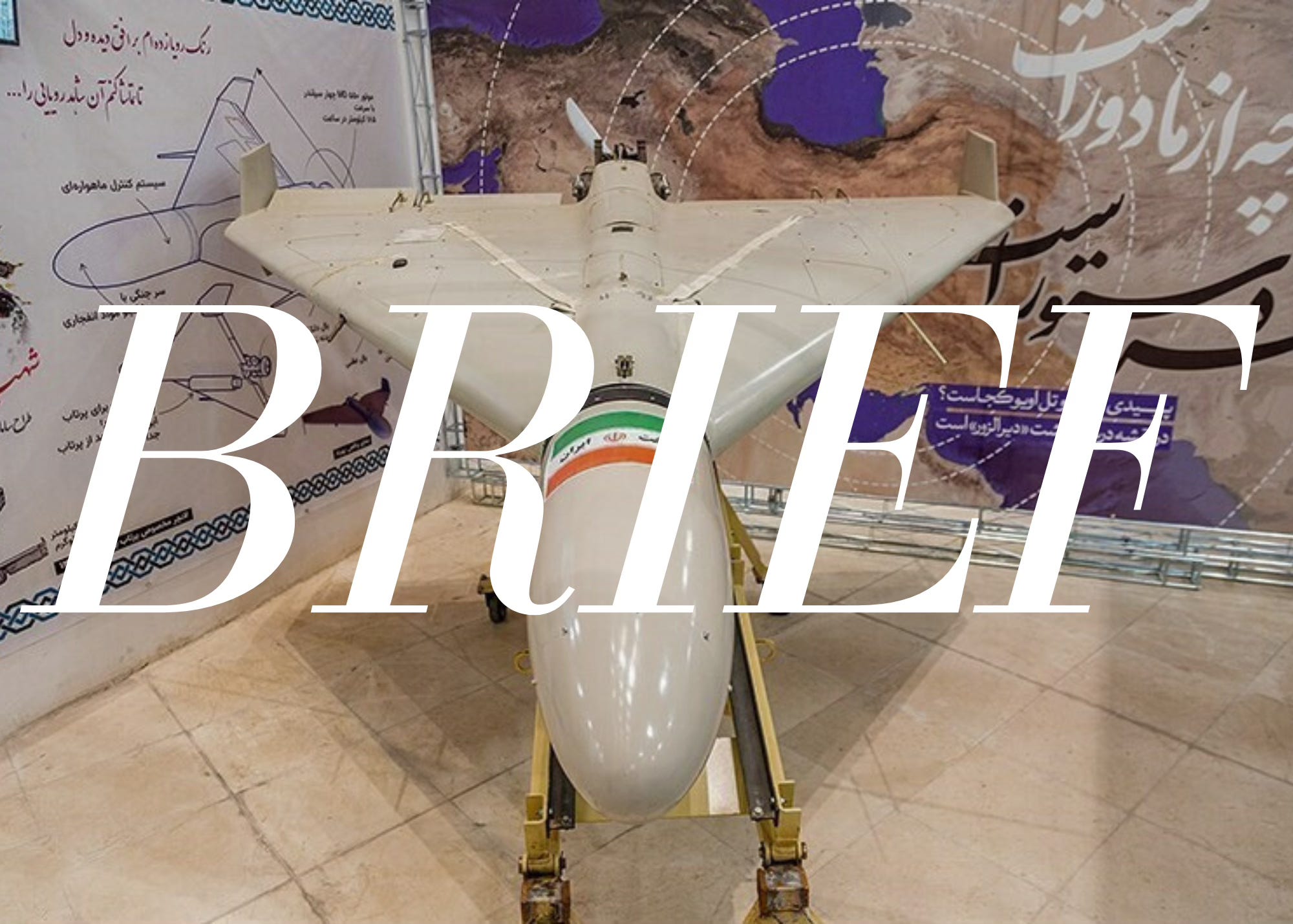
Facts: On Mar. 5, the U.S. formally requested Ukrainian counter-drone technology to combat Iranian drones in the Middle East, which Ukrainian President Volodymyr Zelenskyy agreed to. The request follows the Iran War postponing U.S.-brokered Russia-Ukraine peace talks planned for March 5-6. Since the Kremlin’s 2022 invasion, Moscow has deployed the same Iranian-made drones now targeting U.S. allies in the Middle East. In response, Kyiv has mass developed low-cost interceptors priced between $1,000-$2,000. Currently, U.S. allies in the Middle East rely on American interceptor missiles priced at approximately $12 million each, while Tehran’s drones cost $50,000.
Analysis: The Iran War exposes an inefficiency in how the U.S. combats cheap drone threats: American taxpayers are spending millions funding a problem Ukraine has effectively countered for $1,000. With Kyiv’s cheap interceptor capabilities designed to destroy the exact drones now draining U.S. missile stockpiles, an affordable solution exists. Most notably for the U.S., Zelenskyy is only offering this technology to countries supporting an end to Russia’s war, providing Kyiv leverage as Washington pressures Ukraine to accept a long-needed ceasefire. This dynamic potentially limits Washington’s ability to demand concessions from Ukraine at the negotiating table, as the Pentagon turns to Zelenskyy for drone support. For Americans, if a deal is not sustained, this may mean billions more in defense spending on a problem the government failed to anticipate, while weakening its leverage in a war American tax dollars have spent years attempting to end.
📍Vulnerabilities in Global Religious Travel Exposed as Nigeria Suspends Pilgrimages
Facts: On Mar. 4, the Nigerian government announced the suspension of Christian pilgrimages to Israel and the broader Middle East. Nigerian officials stated that the suspension applies to all pilgrimage travel organized by the Nigerian Christian Pilgrim Commission as well as private pilgrimage operators until the region stabilizes. The decision followed escalating tensions amid expanding Israeli military activity linked to the Israel-Hamas War and confrontations with Iran. The final group of more than 500 Nigerian pilgrims returned safely to Lagos on Mar. 3, concluding the country’s 2025 pilgrimage season in which over 4,000 Nigerians traveled to Christian holy sites in Israel and Jordan last season.
Analysis: Nigeria’s decision illustrates disruption of global religious travel and practices as war spreads across the Middle East. When security deteriorates, governments may halt religious trips to protect their citizens. Each year, thousands of Nigerian Christians make pilgrimages to Israel, creating a steady international flow of visitors to holy sites. The U.S. is also one of the largest sources of Christian pilgrims to Israel. If such instability continues to expand in the region, similar travel disruptions could affect U.S. citizens, churches, and religious tours, demonstrating how Middle East conflicts can directly shape the mobility and religious practices of American communities.
📍Trump Backpedals Kurdish Support Amid Reports of Potential Invasion of Iran
Facts: On Mar. 7, President Donald Trump reversed his support for a Kurdish offensive into Iran, revealing he no longer wants Kurdish forces entering the country. The statement came after U.S. and Israeli officials suggested Iranian Kurdish forces were preparing for a possible ground offensive, moving from camps in Iraqi Kurdistan to the Iran-Iraq border. However, the Kurdistan Regional Government and the White House denied approving a Kurdish offensive. Israel has reportedly worked to open a path for Kurdish forces, backed by Mossad and the CIA, to enter the war. If the U.S. were to greenlight the plan, Kurdish fighters would target the Islamic Revolutionary Guard Corps (IRGC) to create space for open rebellion by Iranian opposition forces.
Analysis: Washington’s inconsistency regarding a potential Kurdish ground offensive betrays a strategic gap in the U.S.-Israeli campaign against Iran. Because airstrikes alone are unlikely to topple the Iranian regime and leaders remain unwilling to deploy ground troops, Kurdish militias may function as proxies to pin down IRGC forces while avoiding direct U.S. ground involvement. However, that strategy appears disjointed: Israeli officials support a Kurdish offensive while the Trump administration now opposes it. The confusion exposes the risks of a joint U.S.-Israeli operation driven by inconsistent and unaligned objectives, calling into question the campaign’s overall trajectory and viability.
📍U.S. Launches Joint Strikes in Ecuador Against Alleged Drug Smuggling Facility
Facts: On Mar. 6, the Pentagon announced the success of a joint U.S.-Ecuador operation against a suspected drug-smuggling facility within the South American country, the latest in a series of American military actions targeting drug-trafficking networks in Latin America. The facility was reportedly linked to a local cocaine trafficking partner for the Jalisco New Generation Cartel (CJNG), one of Mexico’s strongest cartels. Ecuador is a logistics hub for CJNG’s cocaine supply; Ecuadorian President Daniel Noboa stated that 70% of the world’s cocaine flows through the country. In late February, the U.S. provided the Mexican government with intelligence that enabled the killing of “El Mencho,” CJNG’s founder and kingpin. A core driver of the drug trade, CJNG is notorious for its vicious tactics, including mass disappearances, political assassinations, and drone warfare.
Analysis: The joint operations in Ecuador signal a shift in U.S. anti-narcotrafficking policy away from primarily curbing the flow of drugs across American borders towards dismantling the cartels themselves. By targeting Ecuador’s cocaine supply, Washington puts pressure on the Mexican market, already vulnerable after the February operations left CJNG without a leader. As U.S. strategy shifts towards active confrontation, cartels such as CJNG have stronger incentives to retaliate, raising the risk that their brutal tactics at home could migrate north of the border.
📍DOJ Pushes For Investigation Against Cuban Officials Amid Growing Threat of Intervention
Facts: On Mar. 7, U.S. agency officials from the Justice Department, FBI, Treasury Department, and Drug Enforcement Administration formed a working group to bring criminal cases against leaders of Cuba’s government and Communist Party. The initiative aims to examine alleged sanction evasion, immigration, and drug-related crimes, with proceedings following heightened pressure on Havana through a de facto oil blockade and subsequent energy crisis. Threats of investigation have intensified through Trump’s repeated suggestion that Cuba will succeed Venezuela and Iran as the U.S.’s next target for intervention.
Analysis: For foreign policy analysts, the Justice Department’s pursuit of indictments reflects a broader strategy to assert U.S. primacy in the Western Hemisphere, building the legal justification for future actions against Cuba’s leadership, as was true for Venezuelan President Nicholas Maduro. Instability in Cuba could trigger socioeconomic consequences across the Caribbean, including migration pressures and disruptions to regional trade and tourism. Additionally, continued U.S. encroachment in the region would likely affect energy markets, government spending priorities, and supply chains tied to strategic shipping routes. For Americans, this risk reveals that political upheaval on the island has the potential to disrupt U.S. household costs and further rewrite the security status quo of the hemisphere.

📍Australia Authorizes Humanitarian Visas for Iranian Soccer Players
Our View: On Mar. 2, Australia authorized humanitarian visas for five Iranian soccer players seeking asylum at the Asia Cup tournament after they refused to sing the national anthem at a match against South Korea. The move followed a public expression of concern by U.S. President Trump to Australian Prime Minister Albanese on social media, despite a deteriorating U.S.-Australia relationship. Australia’s involvement in protecting Iranian players demonstrates the war’s widening ripple effects, presenting Washington with a new opportunity to renew alliances after recent rifts have put the relationships under strain.

💡On March 8, Colombian President Gustavo Petro’s left-wing coalition won the most seats in congressional elections, but failed to secure a majority, reflecting political polarization as voters shifted away from traditional parties.
💡 G7 nations pledged to take “necessary measures” to stabilize global energy markets as oil prices surged past $100 a barrel on March 9, including coordination with oil-producing countries and potentially using strategic reserves.
💡In a call to U.S. President Donald Trump on March 9, Russian President Vladimir Putin pushed proposals for a quick political and diplomatic settlement to the war with Iran.
🚗One For The Road🚗
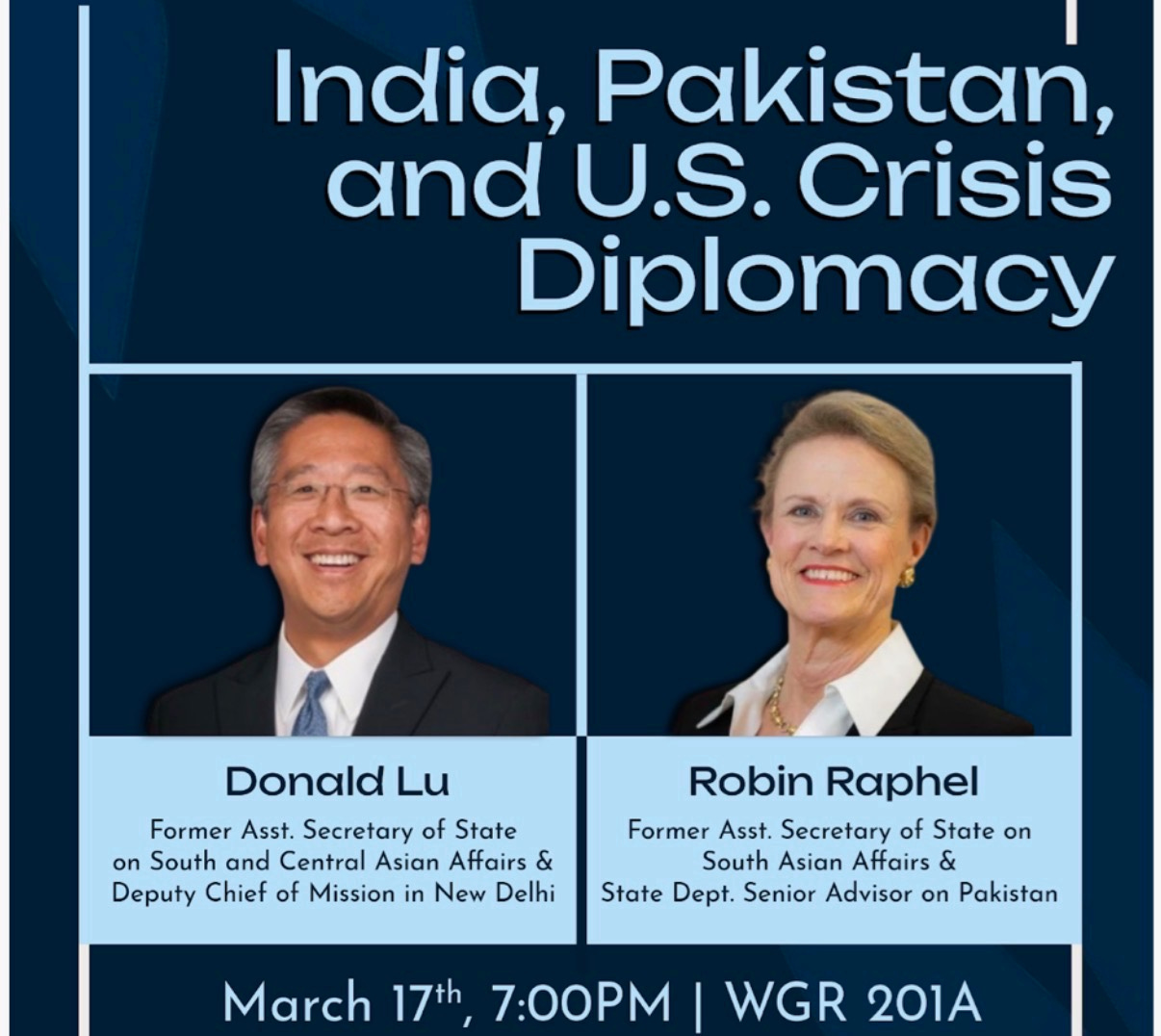
On March 17th, the Stratagem Initiative and the Washington Forum on India are hosting “India, Pakistan, and U.S. Crisis Diplomacy: A Conversation with Ambassadors Donald Lu and Robin Raphel” to hear from experts on the region and discuss the aftermath of the May 2025 conflict as well as the future of U.S. diplomacy between the two countries.
This event is open to all and will take place in White Gravenor 201A at 7:00 PM. Afterwards, there will be a networking session with diplomats from the Indian Embassy, researchers at think tanks across D.C., and other professionals in the U.S. and South Asia security spaces.