

🌎The Brief #36
U.S. General Warns of Russian Nuclear Space Weapon, Xi Jinping Hosts UAE Crown Prince, Zimbabwe and Kenya Seek Economic Support Amidst Iran War, European Commission Grants $1 Billion in Defense R&D

What We’re Watching
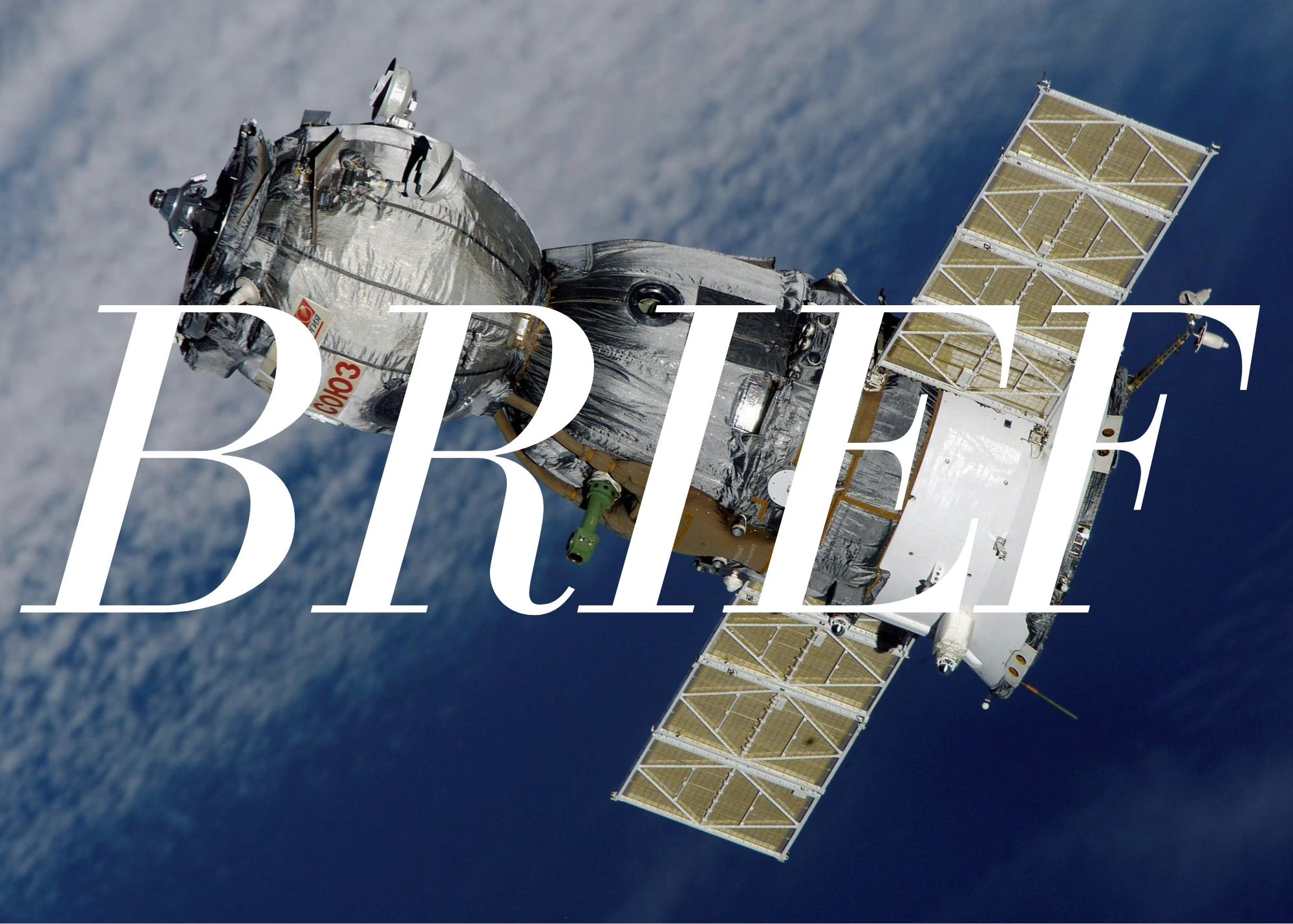
📍U.S. Commander Warns of Russian Nuclear Deployment to Space
Facts: On April 16, U.S. Space Force Commander Steven Whiting warned that Russia is planning to deploy a nuclear weapon into low orbit with the capability to destroy Western satellites. A detonation of this weapon could wipe out an estimated 10,000 satellites, stalling GPS, internet, and communications worldwide. Russia already actively pursues its hybrid model of warfare by disrupting satellite function and endangering passenger aircraft through jamming signals all over Europe. Additionally, Moscow is not the only country seeking to interrupt satellite operations: China has built and tested weapons as recently as 2024 to target U.S. satellites, including jammers, energy weapons, and anti-satellite rockets.
Analysis: The threat of Russia’s rumored deployment reveals an urgent structural vulnerability in the developing area of orbital defense infrastructure. If successful, the detonation would neutralize Western technological edge by decimating its satellite infrastructure. Both Moscow and Beijing’s satellite disruption strategies aim to diminish Western space advantages rather than matching development weapon-for-weapon. While Russia pursues more extreme destruction that threatens what’s been dubbed a “space Pearl Harbor”, China favors a targeted arsenal to track and disable U.S. satellites, demonstrating layered capabilities to cripple communication. Together, these strategies reflect a mounting effort by adversarial powers to dominate space as a battlefield, threatening Western communication, technological advantage, and the civilian infrastructure billions depend on daily.
📍Xi Jinping Hosts UAE Crown Prince in Beijing Amidst Shifting U.S.-Iran Conflict
Facts: On April 14, Chinese President Xi Jinping hosted Abu Dhabi’s Crown Prince, Sheikh Khaled bin Mohamed bin Al Nahyan, in Beijing. As the centerpiece of his official three-day visit, Al Nahyan and Xi Jinping met to address regional security and de-escalation amidst active hostilities with Iran. During the engagement, President Xi proposed a four-point peacebuilding framework centered on peaceful coexistence, state sovereignty, international law, and the coordination of economic development with security. The visit solidifies the China-UAE partnership, reaffirming the UAE’s role as a “comprehensive strategic partner” for China.
Analysis: The Beijing meeting signals broader realignment across the Middle East, as China cements influence and mutual dependence through diplomatic mediation with Gulf partners—namely Saudi Arabia. As regional tensions escalate, China presents itself as a stable and reliable security partner for Gulf States, prioritizing non-interference and regional cooperation. Despite tactical successes, the 2026 war in Iran has eroded trust in U.S. security commitments, exposing the vulnerability of Gulf States that host U.S. bases. As China offers a strategic alternative to U.S. security, Washington risks losing its long-standing role as the primary security guarantor in the Middle East. By leveraging diplomacy rather than military force, China secures its economic interests, supplanting U.S. influence and jeopardizing its market position.
📍Iran War Shock Forces Zimbabwe and Kenya Into IMF and World Bank Programs
Facts: On April 16, the International Monetary Fund (IMF) approved a 10-month staff-monitored program for Zimbabwe aimed at stabilizing its economy. The program emphasizes fiscal discipline, exchange rate reforms, and rebuilding credibility with international lenders after years of inflation and debt distress. The same week, Kenya moved to secure additional financing from the World Bank to manage rising budget pressures driven by surging energy prices, higher import costs, and tightening global credit. According to Zimbabwean and Kenyan officials, both actions follow economic disruptions tied to the ongoing Iran War, which has driven up energy prices and strained supply chains worldwide.
Analysis: Zimbabwe and Kenya’s near-simultaneous turns to international financial institutions exemplify how quickly global shocks strain already fragile economies. The Iran War’s impact on energy markets is forcing import-dependent economies into reactive financial strategies, increasing reliance on global lenders. While this pattern underscores the expanding role of the IMF and World Bank as stabilizers during geopolitical crises, it also raises concerns about long-term dependency and reduced economic autonomy. As a leading funder of these institutions, the U.S. helps absorb the economic fallout of conflicts abroad. However, the direct link between U.S. policy decisions and the Iran War intensifies the pressure on Washington to mitigate economic instability and manage the consequences of a crisis it helped create.
📍European Commission Grants €1 Billion to Defense R&D, Pushing EU Autonomy and Ukraine Partnership
Facts: On April 15, the European Commission announced €1.07 billion in funding for 57 defense research and development projects under its 2025 call for project proposals to the European Defence Fund. The project’s focus is on reducing dependence on foreign suppliers, accelerating low-cost drone and counter-drone production, and strengthening Europe’s defense industrial capacity. The package also incorporates Kyiv into the EU’s defense innovation framework by opening projects to Ukrainian subcontractors and allowing Ukrainian startups to compete for additional funding. The announcement comes after Washington’s repeated urging of NATO allies to increase defense spending and assume a larger share of Europe’s security burden.
Analysis: This commitment to funding defense research and development shows the EU is drawing lessons from the Ukrainian battlefield and responding to a push from Washington, shifting toward a more self-sufficient defense posture. A transformation that prioritizes scalability, adaptability, and affordability may help the bloc respond more effectively to wartime demands. For Washington, the effort presents a double-edged sword: by investing in domestic, low-cost production, the EU could reduce business for U.S. defense firms, decreasing American influence over future military operations, and strengthening the arsenals of states whose alignment with Washington becomes less certain.
📍Third U.S. Aircraft Carrier Sails Around Africa En Route to the Middle East
Facts: On April 13, the U.S. aircraft carrier George H.W. Bush was reported off the coast of Namibia. It bypassed the navy’s preferred route to the Arabian Sea through the Suez Canal, instead sailing around the Horn of Africa. The Bush will reinforce President Trump’s blockade against Iran, which he announced on April 12. U.S. defense officials said the detour keeps the carrier out of the Bab el-Mandeb, the narrow strait between Yemen and Africa, where Iranian-backed Houthis can strike ships with missiles and drones. Two other carriers await the Bush: the USS Gerald R. Ford, which recently surpassed 296 days deployed, the longest American carrier deployment since Vietnam, and the USS Abraham Lincoln, currently operating in the Arabian Sea. The route around Africa will add two weeks to Bush’s trip to the Strait.
Analysis: At a crucial chokepoint, the Bush’s detour reveals Iran’s preserved leverage over U.S. forces through its Axis of Resistance. In light of the failed 2023 U.S.-led operation to secure the strait, naval maneuverability in the region will require Washington to develop a new military strategy. Regardless of whether the White House can force concessions for proxies in negotiations with Iran or directly broker a truce with the Houthis, the current cost of detours will fall on the U.S. crews and resources of ships deployed in the region. Amid a rapidly shifting conflict in the Gulf, an extra two weeks of travel time to and from the Arabian Sea will hinder U.S. military flexibility.

📍U.S. Vice President Vance to Travel to Islamabad As Iran Seems Unwilling to Renew Peace Talks
Our View: On Tuesday, April 21, JD Vance is set to travel to Islamabad, Pakistan, to begin a second round of peace talks with Iran. However, Iran expressed conflicting views, claiming a “deep historical mistrust” remains with U.S. officials. Tehran is calling for an end to the U.S. blockade in the Strait of Hormuz, while the Trump Administration’s stated intent is to prevent Iran from building nuclear weapons. Both sides seemed unwilling to budge in the first round of peace talks, and not much progress has been made since the two-week ceasefire was agreed upon on April 7. In light of the U.S. striking an Iranian container ship that ignored the blockade, Washington’s war policies continue to be inconsistent, increasing pessimism surrounding peace talks.

💡Two US officials stationed in Mexico died over the weekend in a car crash after participating in a drug raid – an operation in collaboration with the local Chihuahua government, which Mexican President Claudia Sheinbaum said the security cabinet was unaware of.
💡On April 19, the Tigray People’s Liberation Front in Ethiopia announced it will resume governance over the Tigray region, discontinuing the interim government established by the 2022 Pretoria Agreement, which ended the two-year war between federal forces and Tigray rebels.
💡The Trump Administration’s two-week ceasefire with Iran is set to expire on Wednesday, April 22nd, according to a Pakistani source involved in the peace talks. Although Tehran is weighing participation in negotiations, the Iranian Foreign Minister has cited “continued violations of the ceasefire” as barriers to a diplomatic solution.