

🌎The Brief #27
U.S. Accuses China of Nuclear Testing, Cuba Faces Humanitarian Collapse, Zimbabweans Turn to Funeral Coverage, U.S.-Colombia Relations Remain Positive after White House Meeting

What We’re Watching
📍U.S. Accuses China of Conducting Secret Nuclear Tests as U.S.-Russia Nonproliferation Treaty Expires
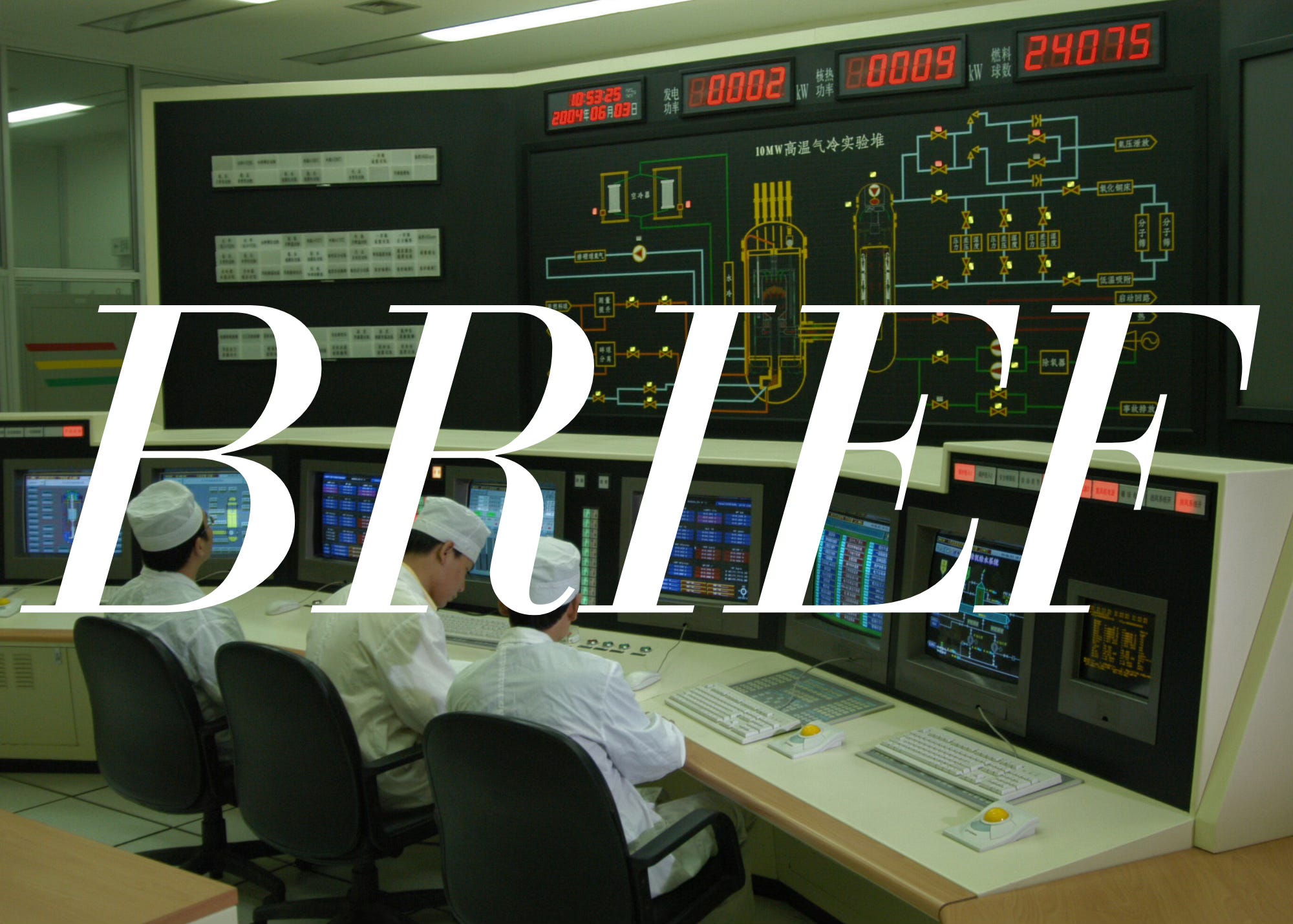
Facts: On Feb. 6, U.S. Undersecretary of State Thomas DiNanno accused China of conducting secret nuclear testing in June 2020 using “decoupling,” a technique in which a nuclear device is detonated in a large underground cavity to reduce its seismic impact and evade detection. China denied this accusation. DiNanno’s announcement came one day after the expiration of the U.S.-Russia New START treaty, leaving the nuclear superpowers without limits on their arsenals for the first time in decades. The treaty’s expiration comes as China seeks to expand its arsenal, projected to field over 1,000 warheads by 2030. China’s last acknowledged test occurred in 1996, Russia’s in 1990; however, the U.S. has repeatedly accused both China and Russia of violating their moratorium and treaty commitments.
Analysis: Alleged Chinese use of decoupling shows how traditional compliance structures are increasingly vulnerable to evasion. Weakening compliance verification, not just collapsing treaties and moratoriums, exposes a broader erosion of nuclear nonproliferation. The discrepancy reveals an institutional mismatch between the Cold War-era arms control frameworks, such as New START, designed for a bipolar nuclear order, and the modern multipolar environment in which many nuclear powers operate with varying degrees of integrity. As the nuclear landscape evolves, nonproliferation may be defined less by the limits of arsenals and more by the credibility of compliance verification structures.
📍Cuba Warns of “Humanitarian Collapse” as Threat of U.S. Tariffs Strains Island’s Fuel Reserves
Facts: On Feb. 5, regions of Cuba were hit with blackouts as new tensions with the United States raised concerns about dwindling fuel reserves. The U.S. announced that it would pursue tariffs on any country supplying oil to the island. The Trump Administration has tightened its stance on Cuba over the past year, claiming the country poses an “unusual and extraordinary” security threat. In January, the U.S. blocked oil imports from Venezuela, Cuba’s main supplier, hiking prices for food and transportation. Cuban President Miguel Diaz-Canel announced that the country was “prepared to engage in dialogue” with the United States, but has yet to establish bilateral talks.
Analysis: The Trump Administration’s escalating economic pressure on Havana speaks to broader efforts to reassert U.S. leverage in the Western Hemisphere. Since Cuba produces little domestic oil and relies heavily on imports, the U.S. is able to weaponize its energy market, forcing compliance amid renewed confrontations with Venezuela and Iran. Countries like Mexico, which have typically supplied Cuba with oil in the past, are forced to halt their activity on American terms, or face the economic cost of defiance. The expansion of the U.S. tariff regime increases the risk of retaliation and downstream volatility in Western energy markets.
📍Zimbabwe’s Shift to Funeral Insurance Signals Collapse in Affordable Healthcare
Facts: As of Feb 2026, Zimbabwean health insurance costs around $200 per month. Since 2020, private hospitals in the country have raised their fees faster than inflation, with medical consultations costing upwards of $600. However, Zimbabwean funeral insurance premiums start as low as $0.75 to $1, making them far more affordable. In response, millions of Zimbabweans are increasingly choosing funeral coverage over medical insurance, making burial policies the most widely held financial product in the country. Zimbabwean families now purchase funeral insurance as their only form of coverage, as a single hospital visit can cost more than an entire year of burial premiums.
Analysis: Zimbabwe’s shift toward funeral insurance illustrates how people prioritize what is affordable. When health insurance and hospital visits become too expensive, families choose cheaper funeral coverage because it guarantees assistance during a major life expense. This trend reflects a healthcare system in which medical treatment sits financially out of reach for many citizens. When considering the U.S., Zimbabwe’s crisis spotlights a concern for many Americans: if healthcare costs keep rising, more people may fall back on life insurance, emergency savings, crowdfunding, or debt instead of real medical coverage.
📍Trump and Petro Reaffirm U.S.-Colombia Cooperation
Facts: On Feb. 3, Colombian President Gustavo Petro met with U.S. President Donald Trump at the White House to reset strained ties and discuss counternarcotics cooperation, migration, and trade initiatives. The meeting took place after months of hostility between the leaders following America’s military operation in Venezuela and Colombia’s rising coca production, accounting for 70% of the world’s cocaine. After the U.S.’s capture of Venezeluan Preisdent Nicholas Maduro, Petro criticized U.S. foreign policy as “imperialist” while President Trump threatened to expand military counter-narcotics operations into Columbia. Nonetheless, both leaders emphasized the strategic importance of cooperation, hailing the meeting as “very positive,” notably agreeing on anti-drug initiatives and “reviving” Venezuela’s economy through gas exportation deals.
Analysis: Greater U.S.-Colombian counternarcotic action reshapes Colombia’s domestic security strategy, with powerful groups like the Gulf Clan already suspending peace talks in response to the renewed U.S.–backed offensive against major traffickers. Nonetheless, working with Bogotá to disrupt drug flows into the U.S. is crucial to asserting American interests in negotiations with Latin America. Stronger bilateral ties can help stabilize trade with a key Latin American partner, supporting U.S. access to everyday goods like coffee and cut flowers while reducing the migration and security pressures that often drive federal spending and border policy debates.
📍 Ukraine Struggles to Adapt Energy Grid Amid Russian Attacks
Facts: In early February, Ukraine reiterated its need for $1 billion worth of energy support. Allies including Sweden responded by pledging funds and sending cogeneration units that produce both electricity and heat. Russia has consistently weaponized winter during the war, decimating Ukrainian energy grids. In response, Ukraine sought solutions by establishing “Invincibility Points” with free power, introducing electricity restrictions, and announcing plans to decentralize Kyiv’s heating system. However, following Moscow’s Feb. 3 missile and drone attack, much of the donated energy equipment remains unconnected due to safety regulations, budgetary constraints, and labor shortages, forcing Ukrainian citizens to remain in an energy crisis.
Analysis: Ukraine’s government has struggled to quickly integrate to or implement its idle equipment stocks, highlighting the struggle to transition from its existing, centralized system toward the rapid innovation needed to adapt the country’s grid to attacks. This challenge emphasizes energy decentralization as an urgent necessity in the form of small-scale, dispersed power units and presents a unique opportunity for Ukraine and its allies to emerge as leaders in rapid energy innovation. By abating one of Ukraine’s primary vulnerabilities, achieving energy resilience would significantly diminish Russia’s leverage in the war and create long-term opportunities for foreign investors.
📍 U.S. and China Opt out of Declaration Governing AI Military Use
Facts: On Feb. 5, 35 out of the 85 countries attending the Responsible AI in the Military Domain (REAIM) Summit in A Coruña, Spain, agreed to a non-binding declaration surrounding the use of artificial intelligence in warfare. The framework cites human operators in direct control over AI-powered weapon systems, mandating clear command structures and risk assessments with sufficient AI-oriented training. As two of the largest military AI developers, the U.S. and China declined to sign. In January, the U.S. The Department of War released the unclassified 2026 National Defense Strategy listing deterring China as the U.S. second strategic regional priority, marking a shift from earlier U.S. defense strategies ranking strategic competition with China as the primary global challenge.
Analysis: Washington’s refusal marks a reversal of prior policy decisions in 2023 and 2024, when it instead endorsed similar AI governance blueprints. This reveals a new prioritization of unrestricted AI development over international norm-setting. Agreeing to rules which require human control could limit such systems during high-risk conflicts like a Taiwan crisis or U.S. naval operations in the South China Sea. Washington and Beijing’s decision signals that regulatory frameworks will be shaped by nations without comparable AI capabilities while the two preserve their technological edge.
📍 U.S. Deploys Troops to Nigeria Amid Growing Collaboration
Our View: On Feb. 3, U.S. Africa Command announced that it deployed a small team of troops to Nigeria amid terrorist threats in West Africa. This news follows the U.S.’s Christmas Day airstrikes against an ISIS-affiliated group in Nigeria as well as the Jan. 29 joint Commercial Investment Partnership meeting, signaling increased cooperation. These developments highlight a shift from traditional bilateral agreements towards uncommon approaches to strategic foreign relationships, emphasizing significant private-sector investment and partnerships with entities outside of the traditional alliance network.

💡Økokrim, Norway’s Economic Crimes Unit, charged former ambassador to Jordan Mona Juul with gross corruption and aiding and abetting following her appearance in the Epstein Files.
💡New satellite images reveal that Iran has completely covered all entrances to the Esfahan nuclear complex, a preparation to mitigate damage in the event of an airstrike.
💡U.S. President Donald Trump is allegedly set to travel to Beijing to visit Chinese President Xi Jinping in April to discuss Taiwanese sovereignty and trade relations.